How to set up a backyard ring toss game for different skill levels
· Editorial team orlandonewsdaily24.com
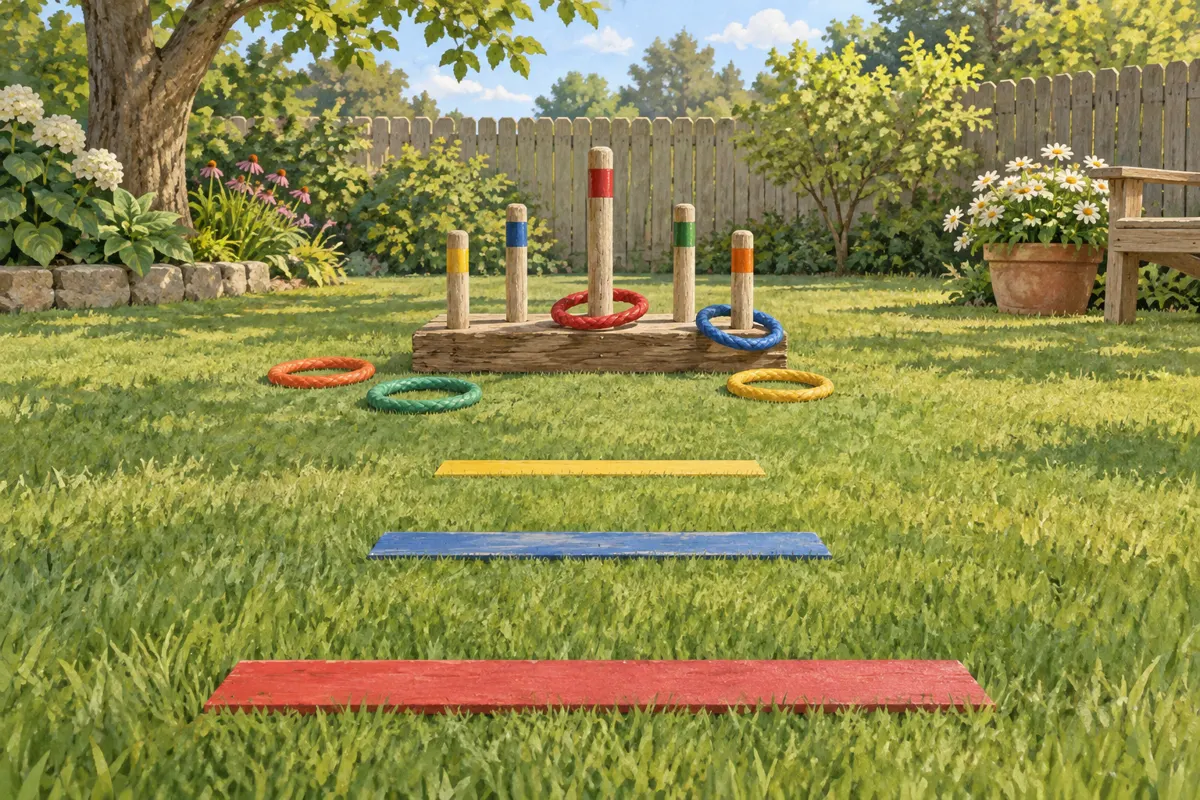
Set your ring toss target on level ground, mark throwing lines at different distances, and give every player the same number of rings. Beginners can throw from closer to the target while experienced players stand farther back. Agree on scoring before starting so everyone can enjoy the same game with a challenge that suits their ability.
Choose a clear spot and gather your equipment
Choose a level patch of backyard with room for the target, throwing area and waiting players. Clear away sharp objects and obstacles, and check that the target sits securely. Keep the space between the throwing line and the pegs clear while someone is tossing.
- A ring toss board or stable peg target with compatible rings.
- Enough rings to give each player an equal number of throws.
- Flat markers for the throwing lines.
- Paper and a pencil if you plan to keep score.
Have an adult oversee play when young children are involved. Establish one easy rule from the beginning: collect rings only after the player has finished throwing and everyone knows the tossing area is closed.
Arrange targets so players can understand the challenge
A single board with several pegs is enough for a shared game. Position it so all players throw toward it from the same direction. If your set includes setup instructions or marked point values, use those as your starting point; board layouts and scoring differ between sets.
If you have separate targets, a proposed arrangement is to put them at a near, middle and far position, all within the same clear throwing area. Start with one point for any successful ringer. Once players understand the layout, you can introduce different values for harder targets.
Avoid changing both the target arrangement and throwing distances during a scored game. Let everyone try the layout first, then keep it consistent until that game ends.
Set throwing lines by ability
Distance is a straightforward way to adjust difficulty while keeping the equipment and scoring the same. Elakai’s instructions suggest a throwing line about 10 feet from the front of its board, but also advise changing the distance for age and ability. Treat that measurement as a reference for that set, rather than a requirement for every backyard game.
- Mark a close line and let each beginner take a few practice throws.
- Move the line closer if reaching the target takes a strained throw or repeated attempts feel discouraging.
- Mark a second line farther back for players who want more difficulty.
- Let everyone choose a suitable line before scoring begins, and keep that choice for the game.
Offer beginners a few turns without scoring. Suggest a balanced stance, a comfortable grip and a controlled underhand toss toward one chosen peg. Change one thing at a time, such as distance, so the next attempt has a clear purpose.
Use scoring everyone can follow
For a first mixed-ability game, this proposed house format keeps counting simple: each player throws five rings per turn, a ring resting around a peg earns one point, and a miss earns zero. Play four rounds, giving everyone the same number of turns. The highest total wins.
- Which throwing line each player will use.
- Whether all pegs score equally or the set’s marked values apply.
- That scores add up individually without canceling another player’s points.
- That tied players either share the win or play one extra round with equal throws.
Add challenges as players improve
After a game, invite players to move their line back if they want a harder next round. Keep closer lines available for anyone still learning. Adjusting distance between games lets the group progress without changing the rules halfway through.
For another challenge, try aiming for every peg in turn. Elakai describes a variation in which each successful peg is closed, its ring stays in place, and the player continues with the remaining rings until all pegs are covered. Explain the variation before starting, and keep the familiar points game available when the group prefers simpler play.